
Find your people
Worldschooling hubs: where traveling families find their people
Worldschooling hubs are the heart of learning through travel: place-based communities where families land in the same destination at the same time, so children learn together and parents stop figuring everything out alone.
If you have been circling the idea of worldschooling and wondering where the community part actually comes from, this is it. Here is what hubs are, the forms they take, and how to find the one that fits your family.
What is a worldschooling hub?
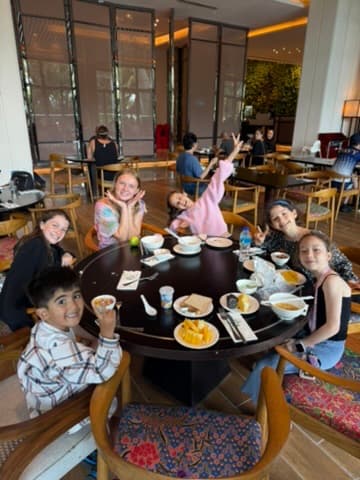
A worldschooling hub is a place-based community of traveling families who gather in one destination for a set stretch of time, so their children can learn, play, and make friends together while parents work, connect, and share the practical load of life on the road.
The important word is community. A hub is not a building, a resort, or a co-working space, even when it uses all three. It is the families. When enough of them overlap in one town, something shifts: children find friends within days instead of months, parents trade hard-won answers about visas and doctors and math curricula over dinner, and the whole family remembers what a village feels like.
Some hubs recur in the same destination season after season. Some pop up once, organized around a single cohort and a set of dates. Some are simply towns where so many worldschooling families overlap that community is waiting whenever you arrive. All of them solve the same problem: travel gives your children the world, and a hub gives them people to share it with.
The forms worldschooling hubs take
The word covers a family of formats. Most hubs you will meet are one of these three, or a blend.
Pop-up hubs and cohorts
A group of families converges on one town for a few weeks, organized around shared dates: a worldschool pop-up hub. Someone sets the frame, everyone books their own accommodation nearby, and the days fill with meetups, outings, and children running in a pack. Pop-ups are a wonderful first taste because the commitment is short and the community is instant.
Long-stay communities
Certain destinations have become gathering places where worldschooling families overlap all year: enough of them that playdates, co-learning groups, and parent circles are always forming. Families arrive for a month of slow travel and stay for six. These communities reward patience: the longer you stay, the deeper the friendships grow.
Seasonal programs
Hosted seasons with structured programming for children: local makers and mentors, balanced days, and a curated cohort of families, run by an organizer who has done the groundwork. These have set dates and limited places, and they carry the most learning depth, because the days are designed rather than improvised.
How to evaluate a worldschooling hub
Not every hub fits every family, and that is fine. Five questions separate a season your family will still talk about in ten years from an expensive detour.
The community
Who else will be there? The families make the hub, more than the destination does. Ask how the cohort comes together, whether families return, and what parents who have actually been say afterward. A hub that families rejoin year after year is telling you something no brochure can.
Ages served
Mixed-age community is one of worldschooling's quiet superpowers, but your children still need peers within reach. Check the actual age range of the cohort, not just the range on the website, and ask how programming adapts across it.
Learning philosophy
Some hubs are pure free play and community; some run balanced days of structured work, hands-on projects, and time with local makers. Neither is wrong. Match the hub to what your children need this season, and to how much of the learning you want the hub to carry.
Season length and rhythm
A week produces acquaintances; six weeks produce friendships and visible growth. Longer seasons let children go deep with a craft, a language, or a project, and let parents build the kind of trust that outlasts the hub itself.
The setting
The unglamorous details decide your daily experience: a walkable town, nature within reach, healthcare you trust, reliable internet, and a time zone that works with your remote hours. A beautiful destination that fights your work day will wear the whole family down.
A note on trust
Anyone can announce a hub. Before you plan a season around one, look for real reviews from families who attended, clear dates, and an organizer who answers questions straight. Honest organizers welcome scrutiny.
Where hubs fit in a worldschooling year
Hubs are not an all-or-nothing commitment. For a first-time family, a single hub stay during a school break or a gap year is the gentlest possible experiment: you arrive to a ready-made community, your children have friends by the second day, and you get to watch real worldschooling up close before changing anything at home. For full-time traveling families, hubs become the rhythm of the year: a season with a cohort, a stretch of independent slow travel, then the next gathering.
Families who have lived it tend to give the same advice: plan the people before the places. A year routed through two or three hubs, with open travel in between, delivers more friendship, more learning depth, and less loneliness than a year of beautiful destinations chosen off a map. The places are wonderful. The people are the point.
The honest truth about finding hubs today
Here is what nobody tells you at the start: the knowledge exists, but it is scattered. Hubs are announced in social groups with tens of thousands of members, passed along in chat threads, and listed on personal blogs that were accurate two years ago. Dates change, organizers move on, and the best cohorts fill through word of mouth before most families ever hear about them.
Harder still, it can be difficult to tell a hub that families love from one that only promotes itself well. The posts you see are written by organizers; the experiences that matter belong to the parents who attended. Finding those voices takes hours of scrolling and a little luck. Worldschooling communities deserve better than luck.
A worldschooling hub directory built for this
We built the Edventures directory to give that scattered knowledge one home: 600+ worldschooling hubs and programs around the world on a live map, with real parent reviews, filtered by your children's ages, your dates, and how each program runs. The directory spans 68 countries, our research has mapped 938 hubs and programs so far, and it keeps growing as we verify more.
600+
Hubs and programs on the live map
68
Countries in the directory
938
Mapped in our directory research
The map and card previews are open to everyone, no account needed. A free account lets you keep browsing every hub on the map. Membership unlocks the full directory: complete parent reviews, pricing, and direct links to each program, so you can compare hubs on what families actually experienced. Founding membership is $99 for your first year.
Our own hub
What a hub looks like when we run it ourselves
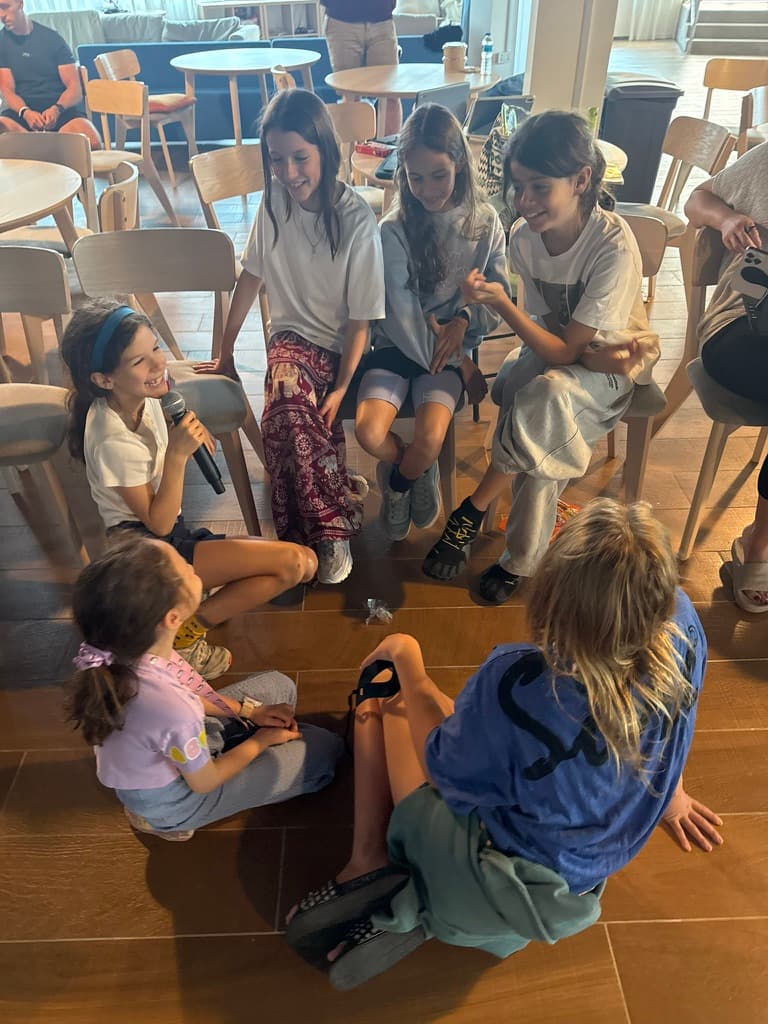
We hold the directory to a standard we are willing to meet ourselves. The Edventures Hoi An Hub is our own seasonal program: six weeks in Hoi An, Vietnam, with a small cohort of worldschooling families living nearby and learning together. Children ages 6 to 17 spend balanced days with local makers and mentors, from leather-working to sewing to music, while parents work, connect, and breathe.
The winter season runs January 15 to February 28, 2027, with a spring season following March 1 to April 15. Cohorts are kept small, so every child is looked after and every parent feels at home.
Worldschooling hub questions, answered
The things parents ask when they start looking for their first hub.
A worldschooling hub is a place-based community of traveling families who gather in one destination for a set stretch of time, usually weeks to months, so their children can learn together and their parents can share the load. Hubs range from informal meetups organized in social groups to structured seasonal programs with daily learning, local mentors, and a curated cohort of families.
Most hubs form around shared dates and a shared home base: families book their own accommodation nearby, children join programming or meetups during the day, and parents work remotely, connect, and trade practical knowledge. Some hubs are parent-organized and informal; others are hosted programs with a set schedule, real-world teachers, and a defined cohort. Both can be wonderful. They simply suit different families and different seasons of the journey.
It varies widely with the destination, the length of the season, and what is included. Community-organized meetups may cost little beyond your family's own travel and living, while hosted seasonal programs with daily programming and mentors are a real investment, priced closer to a quality camp or enrichment program plus your cost of living in the destination. In the Edventures directory, membership unlocks pricing for each listed hub, so you can compare real numbers instead of guessing.
Most families start with social groups and word of mouth, which works but is slow and easy to miss. The Edventures directory brings it into one place: 600+ worldschooling hubs and programs around the world on a live map, with real parent reviews. You can browse the map preview without an account, a free account lets you keep browsing every hub, and membership unlocks the full directory: reviews, pricing, and direct links to each program.
Every hub sets its own range, and many are mixed-age by design, which is part of the magic: older children mentor younger ones, and friendships cross the lines a classroom would draw. Always check the range against your own children's ages before you plan around a hub. Our own Edventures Hoi An Hub, for example, runs programming for ages 6 to 17 with the whole family welcome.
No. Hubs welcome families at every stage: full-time travelers, part-time worldschoolers, and families trying it for the first time during a school break or a gap year. Many parents use a first hub stay as the experiment that tells them whether this life fits, because the community answers most of the questions a blog post never could.
Find your family's hub.
Somewhere on the map, a cohort of families your children will love is choosing its next season. Browse the directory and see where worldschooling families are gathering, or join the community and plan your first hub stay with people who have done it.